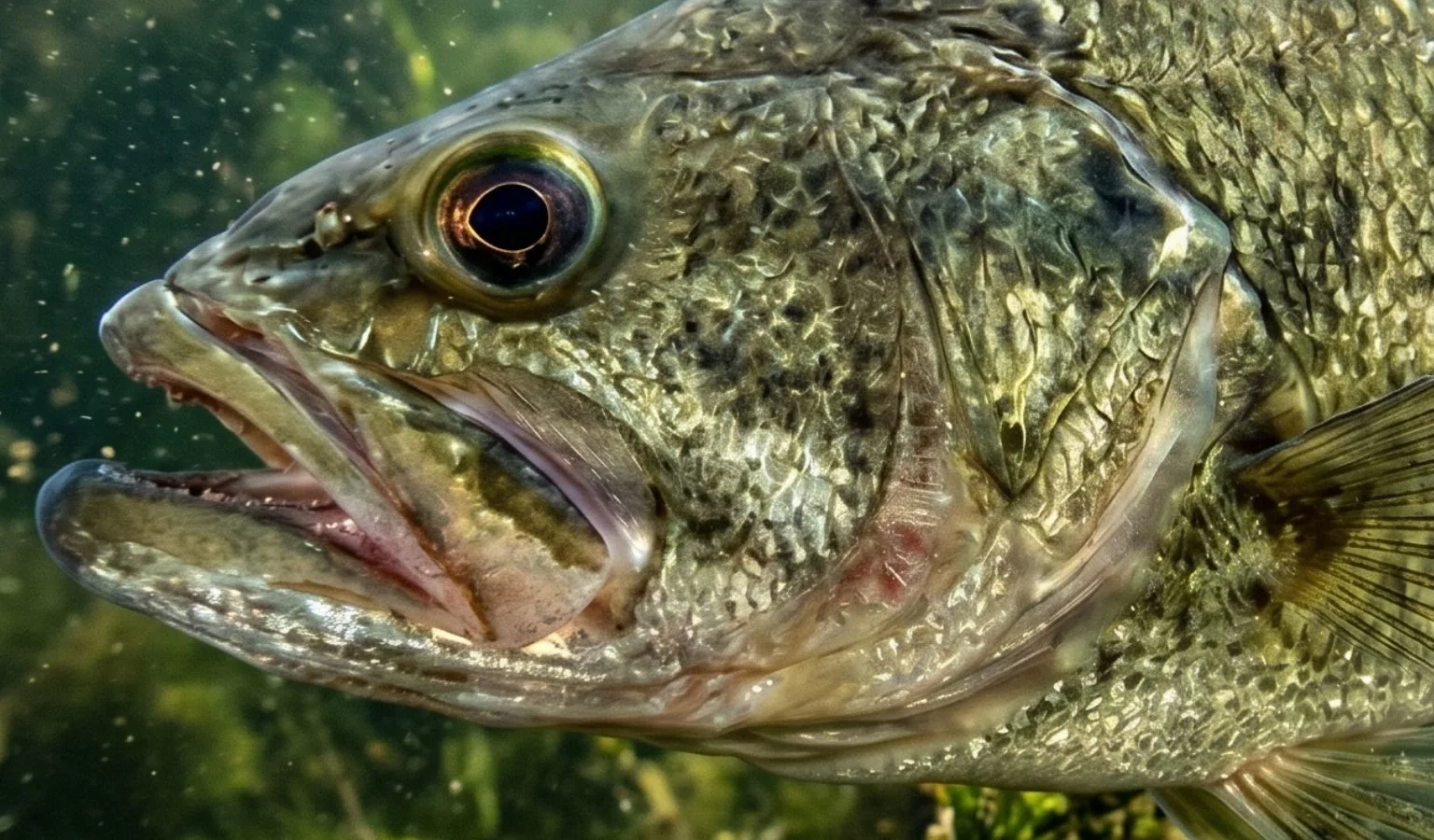
Think of your fish finder as a crystal ball for bass. Because these fish are cold-blooded, their entire personality—and their dinner plans—is dictated by the water temperature.
Stop guessing and start using your boat’s thermometer to unlock the “secret” to where they are hiding and what they’re craving. Here is your cheat sheet via Field and Stream for cracking the code:

The Bass Mood Ring: Quick Reference
| Temp Range | The Vibe | Strategy |
| 45°–50° | Deep, lethargic, “don’t bother me.” | Slow down. Jigs and Ned rigs are your best friends. |
| 50°–55° | Pre-spawn energy! Moving toward the shallows. | Hit the transition banks with crankbaits and swimbaits. |
| 55°–60° | The “big move.” Hungry and aggressive near cover. | Go shallow. Jerkbaits and reaction baits reign supreme. |
| 60°–65° | Spawning time. Homebody energy. | Sight-fish the beds or target the ones still cruising. |
| 65°–70° | Post-spawn recovery. Tired but hungry. | Finesse baits for the lazy ones; topwater for the active ones. |
| 70°+ | Full-blown summer. Heavy feeding offshore. | Deep-diving cranks, football jigs, or topwater for shallow stragglers. |
Don’t Get Duped
While your surface temp is your best baseline, remember it’s not the whole story. On a hot day, the surface might be a tropical paradise, but that doesn’t mean the fish at 15 feet feel the same way.
The Bottom Line: Use the surface temp to get in the ballpark, but don’t be afraid to experiment. Once the mercury drops in the fall, just reverse your logic—the fish will backtrack through these same “highways” until the water gets chilly enough to send them back into their winter hibernation mode.
Keep your thermometer handy, stay flexible, and let the lake tell you what the fish want today!