Key Takeaways
- Food comas aren’t just a human thing—wild animals can show the same “feast, then crash” pattern.
- When food is plentiful, many species prioritize eating now and resting afterward.
- Bears may gorge on calorie-dense foods, especially when preparing for hibernation, and can appear too stuffed to do much more than sleep.
- Humans recognize the same phenomenon in everyday life, from toddlers nodding off mid-bite to hunters dozing after an early breakfast.
- The core pattern repeats across species: eat big, then pass out.
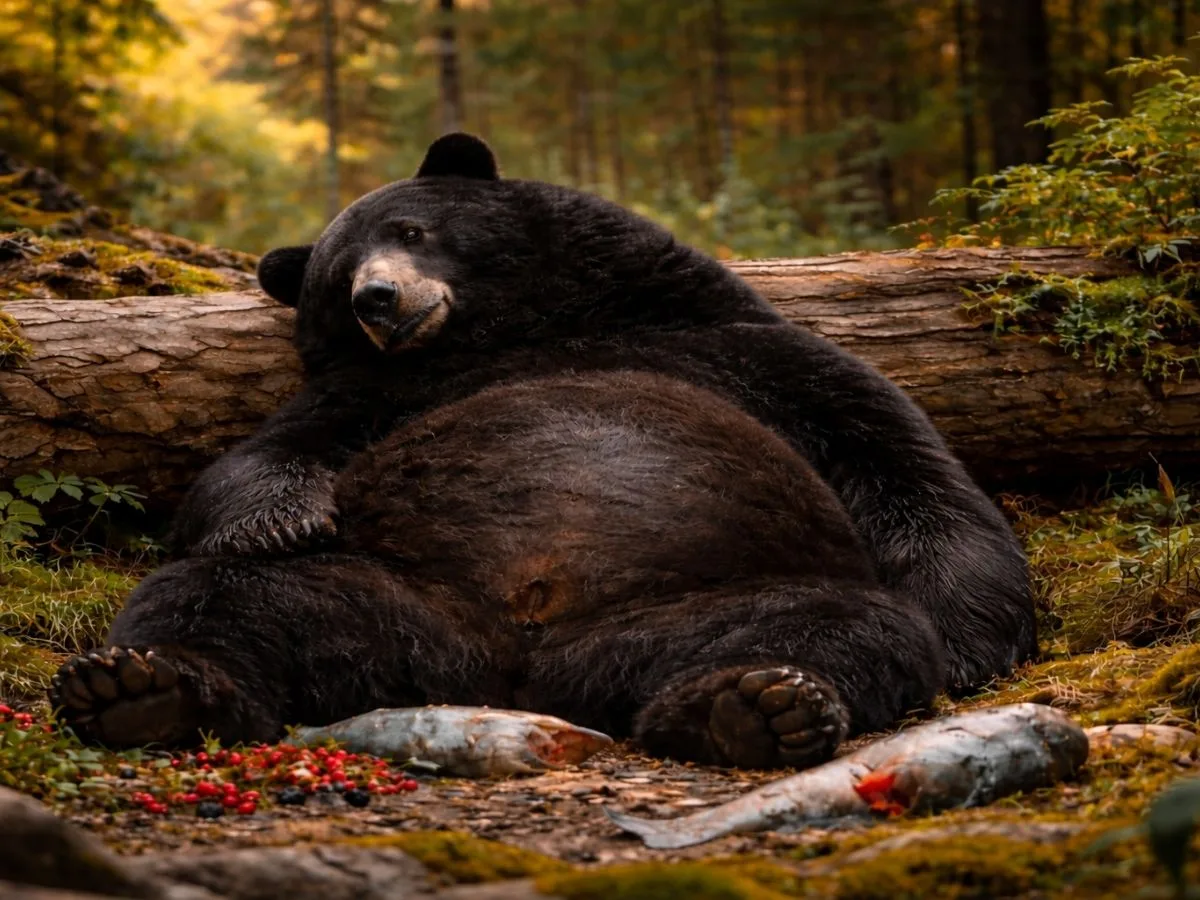
Gluttony isn’t a trait reserved for humans with buffet plates and holiday dinners. In the wild, animals indulge just as enthusiastically when opportunity strikes. Bears, for example (see video below), will gorge themselves on berries, fish, and anything calorie-dense they can find, especially when preparing for hibernation.

The result can look strikingly familiar: a full-bellied bear slumped over in what can only be described as a food coma, too stuffed to do much more than nap off the feast. When food is plentiful, nature often favors the same instinct we see at the dinner table—eat now, rest later.
And people aren’t exactly immune to the same fate. Anyone who’s watched a toddler drift off mid-bite in a high chair, or slowly tip over among scattered blocks after an intense play session, knows how suddenly the crash can come.
Hunters sometimes experience their own version of it too: after a pre-dawn stop for a greasy gas station breakfast sandwich, they lean against a tree in the quiet woods waiting for the sun to come up—only for the warmth, the full stomach, and the early hour to team up and knock them right into a brief, head-bobbing food coma.
Whether it’s a bear in the brush, a toddler in the living room, or a hunter in camo at daybreak, the pattern repeats itself across species: eat big, then pass out.
FAQ: The Food Coma Phenomenon
- What is a “food coma”?
- In this context, it’s that familiar post-meal crash where an individual becomes unusually sleepy or low-energy after eating a lot.
- Do animals really get food comas like humans?
- Yes—when animals gorge themselves, the aftermath can resemble the same full-bellied “nap it off” behavior people recognize.
- Why do bears gorge themselves?
- As described here, bears may gorge on berries, fish, and other calorie-dense foods—especially when preparing for hibernation.
- What does a bear food coma look like?
- It can look like a bear slumped over and too stuffed to do much more than rest after a big feast.
- Is the same pattern seen in kids?
- Yes. The post-meal crash can show up fast—like a toddler drifting off mid-bite or slowing down abruptly after playing.
- Can hunters experience a food coma in the field?
- They can. As described here, an early hour plus warmth and a heavy breakfast can lead to a brief, head-bobbing doze while waiting for daylight.
- Is the “eat now, rest later” instinct unique to bears?
- No. The point of the phenomenon is that it repeats across species when food is plentiful.
- What’s the simplest way to describe this phenomenon?
- Across species, it often boils down to the same sequence: eat big, then pass out.
Related Reading
- Grilled Bison (or Elk) Tri-Tip With Bell Pepper Chimichurri: Kokanee Quinn’s Flavor-Packed Recipe
- Idaho Shed Hunter Stumbles on Two Napping Mountain Lions—Can You Spot Them in the Photos?
- Mountain Lions Can Roam Shockingly Far: One Traveled From South Dakota’s Black Hills to Connecticut
- Video: Coyote Chases 3-Year-Old Through Front Gate in Pasadena—Mom’s Scream Sends It Running
- Elk Hoof Disease Explained: How TAHD Spreads, What Researchers Know, and Why Hunters Are Worried