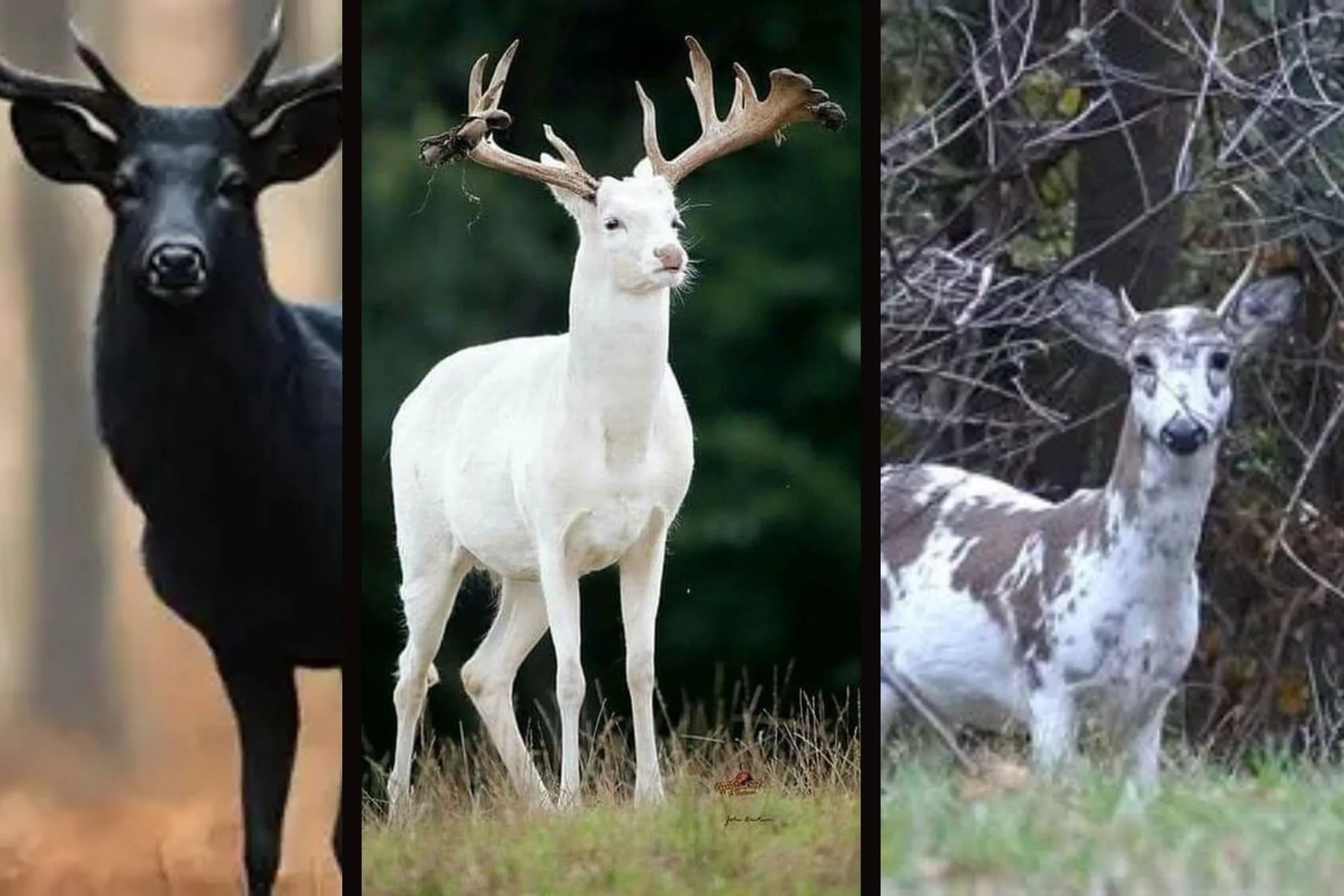
Deer come in all colors. Moose, elk, stags, sika, mulies, and whitetails can have unique color variations. Colors often change with the seasons. his could be the song that Michael Jackson would write after seeing several deer color variations.
Black Deer are known as Melanin deer.

White deer are Albinos.
Piebald deer have both white and brown spots or patterns.
Common deer are natural colors like tan, brown, or rawhide. Many hunters call deer Buckskin in color.
Genetics plays a huge role in figuring out genetic mutations that show up in color variations. Pockets of unique deer color patterns can be healthy. They are common on restricted land areas where hunting is not allowed. Military bases often have hybrid color herds. In New Jersey, white deer are common.
Generally, deer mutations become prey to predators. Hunters also target these unusual colored critters. This limits the size of these populations.
Game farms often support hybrid mutations that they sell to hunters for controlled hunts. Exotics are desired by trophy hunters. Interbreeding is not uncommon.
When hunting deer and elk, I rarely look for colors. Instead, I am looking for horizontal lines. In dark timber, colors vary depending upon the shade and colors of surrounding trees and shrubs. Most lines in the forest are perpendicular. Trees grow upward toward the sun. Horizontal lines are ither fallen trees, which there are less of, or the top or belly of a critter. Once you focus on the horizontal lines and find a target, the colors will help to identify the species.
Hunt Hard, Hunt Harder!
Montana Grant