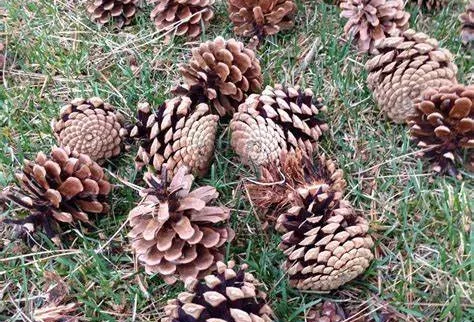

Pinecones are needed for pines or conifers to reproduce. In Montana Pine Trees are the main forest fillers. Back in the good old days, pinecones were believed to enhance fertility. Women would place cones under their pillows.

Most pinecones we find on the ground are seed producing female cones. Pines also carry softer male cones which release pollen. The random dispersal allows seeds to become fertile and begin growing for the next generations. Male cones are much smaller and wither away after they release pollen.
Some pinecones, like Lodgepole pines, require heat and fire to open and disperse seeds. The cones explode, like popcorn, and send seeds flying in all directions. Lodgepole forests may be burned but they will begin a new forest once the fires go out.
Gynosperms translated means “naked seeds”. They do not have true flowers or fruits to develop and disperse seeds. The hard cones protect seeds until ready for planting.
Warm weather is the best time for pine pollination to happen. The cones open and close with heat and humidity. Closed cones are a sign that rain is on the way. Cones are fully open during dry and drought conditions.
Campers gather pinecones for firewood. These dry cones snap, crackle, and pop. Montana Lin loves pinecones. We have bushels for crafts and gifts. Holiday decorations often feature assorted pinecones. They also make for great mulch in the garden.
Montana dinosaurs once feasted on pinecones. The crest headed hadrosaur lived about 60 million years ago. Their mouths were lined with thousands of teeth designed to chew pinecones. Pinecones are commonly found in herbivorous dinosaurs fossilized stomachs. Today, jays, racoons, porcupines, grouse, birds, chipmunks, bears, and squirrels enjoy eating pinecone seeds. Deer hunters can find areas with pinecones full of deer.
Grizzly bears feast on white bark pinecones. These cones are found at higher altitudes and currently endangered. The high protein seeds are preferred by grizzlies. Restorations are in progress. Specific fertile seeds that can only be found at the top of some pines are harvested and sprouted in greenhouses. Once they become seedlings, they are planted in grizzly habitat. In a few decades this may help future bears survive.
The biggest pinecones are called “Widow makers”. These 2-foot-long cones can weigh 11 pounds and fall from the giant Coulter Pine in California. Getting bonked by a Naked Seed would be embarrassing. How do you explain a scar caused from a “Gymnosperm”?
Cones are Cool!
Montana Grant