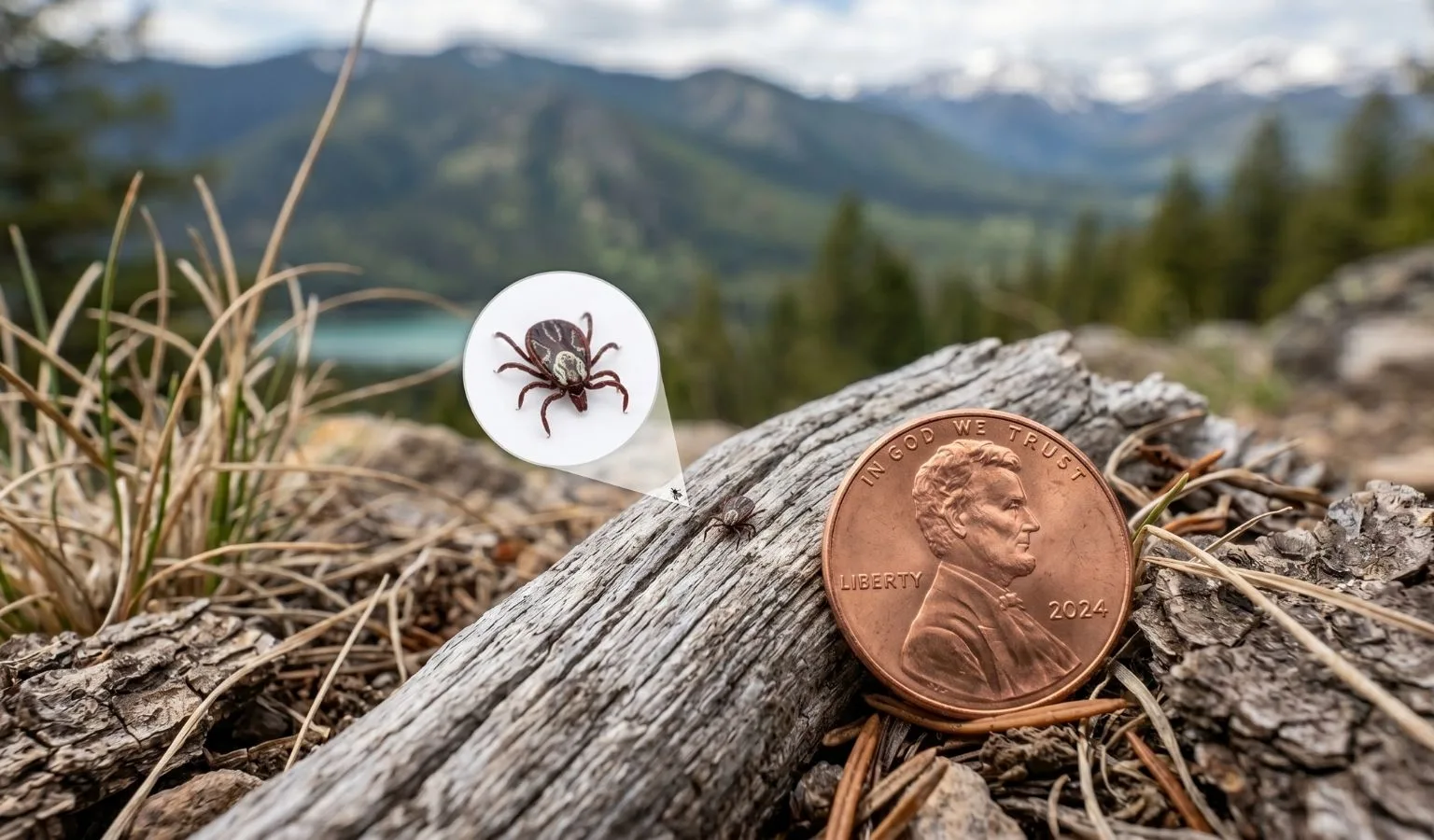
Let’s be honest: nobody ever looked at a tick and thought, “Wow, what a majestic creature.” They are essentially sentient, eight-legged grapes with a thirst for your hemoglobin. While they might be small, they punch way above their weight class when it comes to ruining a perfectly good hike.
Here is the lowdown on how to keep these miniature vampires off you and your furry friends.

Ticks aren’t just gross; they are nature’s little syringes, potentially carrying a cocktail of unpleasantness. While Lyme Disease is the headline act, they also tour with other “hits” like Rocky Mountain Spotted Fever, Anaplasmosis, and the Alpha-gal syndrome (which, terrifyingly, can make you allergic to red meat).
Tip: If you find a tick attached, don’t try to “burn” it off with a match or “suffocate” it with petroleum jelly. This just stresses the tick out, making it more likely to vomit its contents into your bloodstream. One way is to use fine-tipped tweezers and pull straight up.
You don’t have to live in a bubble, but you should probably dress like you’re ready for a very casual, very beige battle.
- The “Steve Irwin” Look: Wear long sleeves and tuck your pants into your socks. It’s not a fashion statement; it’s a defensive perimeter. Light colors help you spot the little stowaways before they find skin.
- Chemical Warfare: Use repellents containing DEET, Picaridin, or IR3535. For the hardcore adventurer, treat your clothes (not your skin!) with Permethrin—it stays effective through several washes.
- The Post-Game Show: After coming inside, do a “tick check.” Check the warm, dark “nooks and crannies”: behind knees, armpits, inside ears, and the belly button.
For the Pets: Furry Magnet Management
Our dogs and cats are basically walking Swiffer pads for ticks. Because they’re closer to the ground and significantly hairier than us, they need extra backup.
- Year-Round Protection: Consult your vet about oral tablets, spot-ons, or collars. Don’t skip months just because it’s “cold”—some ticks are surprisingly hardy.
- The “Pat-Down”: Run your hands over your pet every time they come inside. Feel for any unusual bumps.
- Yard Maintenance: Ticks love tall grass and leaf piles. Keep your lawn mowed and create a “no-man’s land” of woodchips or gravel between your yard and any wooded areas.
Trustworthy Sources for the Deep Dive
If you want to get into the gritty science or see specific regional maps, check out these resources:
- CDC (Centers for Disease Control and Prevention): Tick-borne Diseases Hub
- TickEncounter Resource Center (University of Rhode Island): Identification and Prevention
- AVMA (American Veterinary Medical Association): Pets and Ticks
Stay safe out there, and remember: if it has eight legs and wants your blood, it’s definitely not your friend.