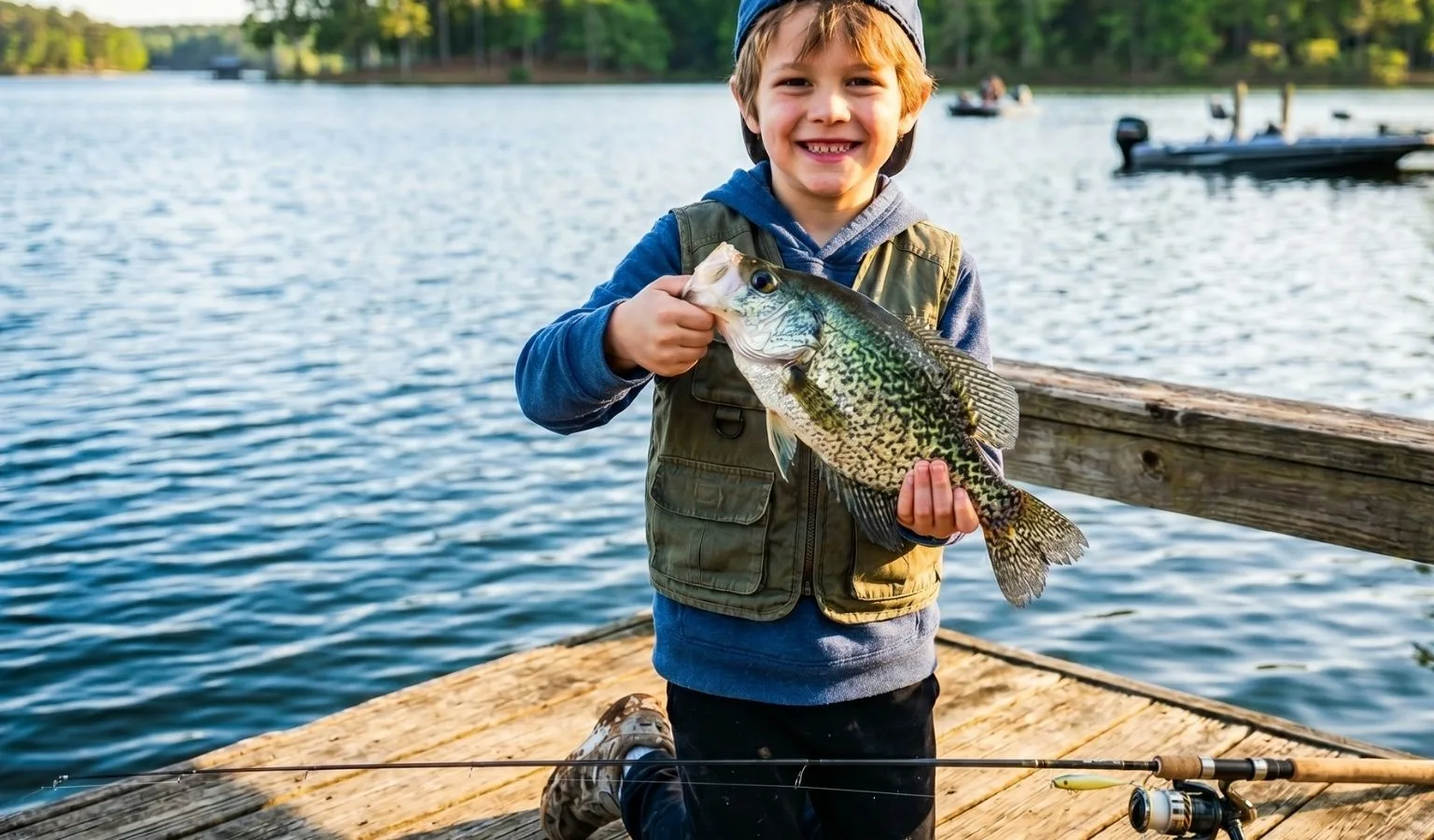
While eating a trophy bass is an invitation for social media exile, the rules for crappie are far more “choose your own adventure.” Depending on where you’re casting, the ethical choice for your dinner plate changes completely.
Here is how the “Keep vs. Release” debate breaks down by region, according to an article by Outdoor Life Editor, Scott Einsmann:

The Southern Strategy: The “Burn Fast” Method
Location Focus: Lake Fork, Texas
Biologist Insight: Jake Norman (Texas Parks and Wildlife)
In the South, crappie live life in the fast lane. Warm water acts like a growth stimulant, meaning these fish hit “legal size” and sexual maturity in as little as one year.
- Lifespan: Short (5–7 years max).
- The Breeders: 1- to 2-year-olds are the heavy lifters. By the time a crappie hits 2 pounds, it’s a “senior citizen.”
- The Verdict: Keep whatever is legal. Taking a giant won’t hurt the population because it was likely going to die of old age soon anyway.
The Northern Strategy: The “Slow & Steady” Method
Location Focus: Oneida County, Wisconsin
Biologist Insight: Nathaniel Lederman (Wisconsin DNR)
Northern crappie are the marathon runners of the species. Because of the cold, they grow slowly but can live up to 15 years. Their reproduction is “boom-or-bust,” meaning one good year of babies has to sustain the lake for a long time.
- Growth Rate: Sluggish (A 9-inch fish might be 5 years old).
- The Strategy: Diversify your bucket. Taking only the biggest fish removes the “pulse” that keeps the population stable.
- The Verdict: Focus on volume over size. Instead of hitting your 25-fish limit, take 10. If you do take a limit, keep a mix of sizes (7″, 9″, 12″) rather than cherry-picking only the giants.
Summary Comparison
| Feature | Southern Crappie (TX) | Northern Crappie (WI) |
| Max Age | ~7 Years | ~15 Years |
| Growth Speed | Fast (10″ in 1 year) | Slow (9″ in ~5 years) |
| Key Breeders | Young fish (1–2 years old) | Variable (Entire size structure) |
| Best Advice | Harvest what you like eating. | Lower your daily limit; keep various sizes. |
The Bottom Line: Before you grab a pitchfork, check the latitude. A slab on a stringer in Texas is just a smart harvest; a slab in Wisconsin is a decade-old investment.
What do you think?