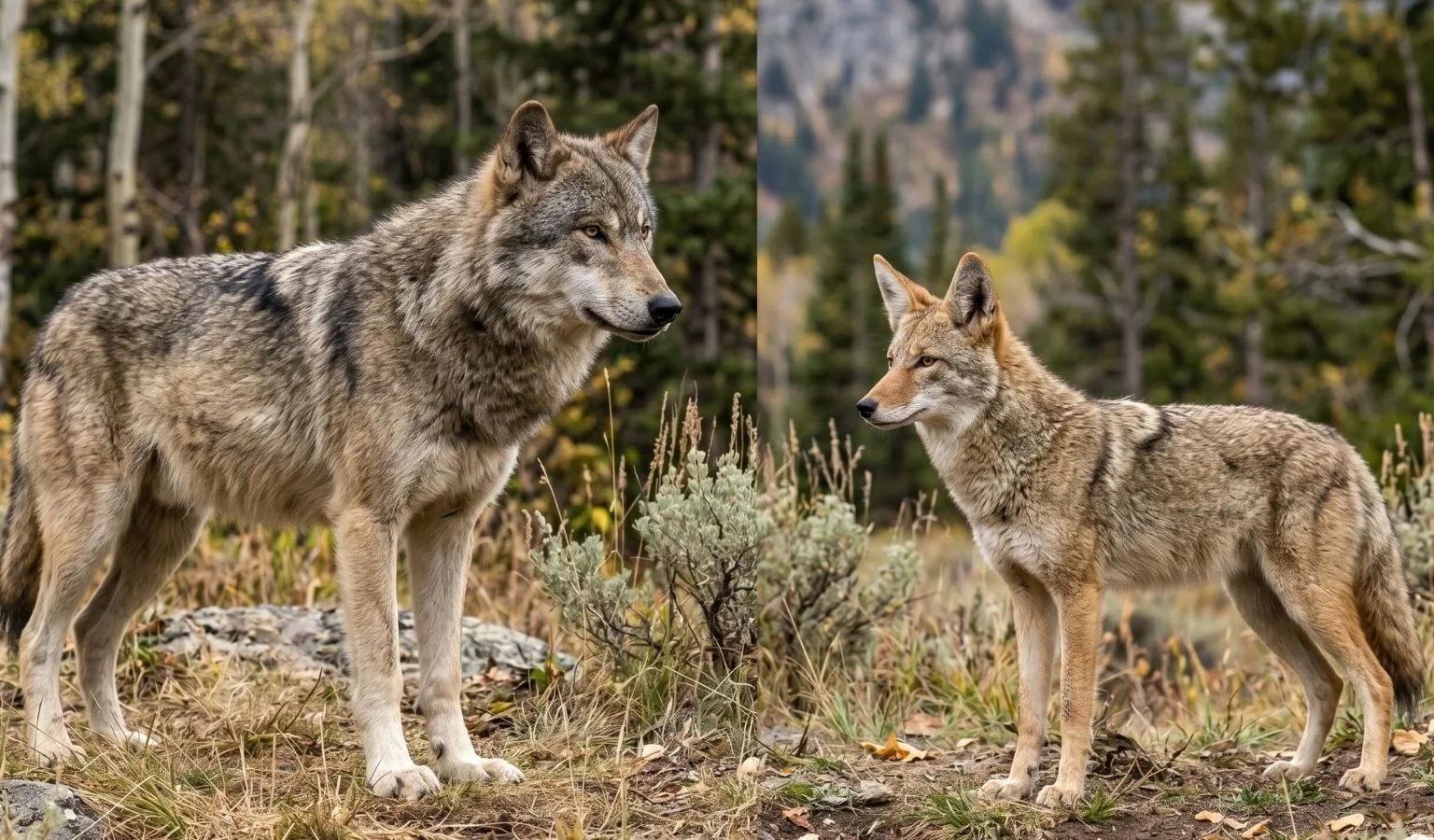
Next time you’re out in the wild and spot a four-legged shadow, keep this in mind so you don’t mistake a “middle manager” for the “CEO.” Identifying our wild canine neighbors is all about the scale:
- The Coyote: Think of them as the acoustic guitars of the brush. They are compact and agile, usually weighing around 30 to 45 pounds. Look for a narrow snout and oversized, pointy ears—perfect for “eavesdropping” on distant sounds. If the animal looks like it’s trying to slip past you unnoticed, you’re likely looking at a coyote.
- The Gray Wolf: These are the grand pianos of the wilderness. A wolf is a true heavyweight, often hitting 100 pounds or more and standing a full foot taller than a coyote. Key giveaways include paws the size of dinner plates, a broad chest, and a commanding presence that says “I own this forest.”
The Bottom Line: While they share a family tree, the difference is massive. A coyote is a clever, sleek scavenger; a wolf is a legendary apex predator. Stay observant and keep a respectful distance from both!
Source information: A – Z Animals, Britannica, Wyoming Game and Fish Dept