Forget candlelit dinners and romantic music; for Montana’s walleye, the start of the next generation involves a floating barge, a gale-force wind, and a handful of bird feathers.
Andrew McKean posted on March 30th that the annual Fort Peck Reservoir “spawn” is less of a natural event and more of a gritty, all-hands-on-deck intervention. Because the reservoir is prone to fluctuating water levels, the walleye’s traditional rocky nurseries are often left high and dry or buried in silt. To keep the state’s favorite fishery from collapsing, Montana Fish, Wildlife & Parks (FWP) workers and a small army of volunteers step in to play nature’s middleman.

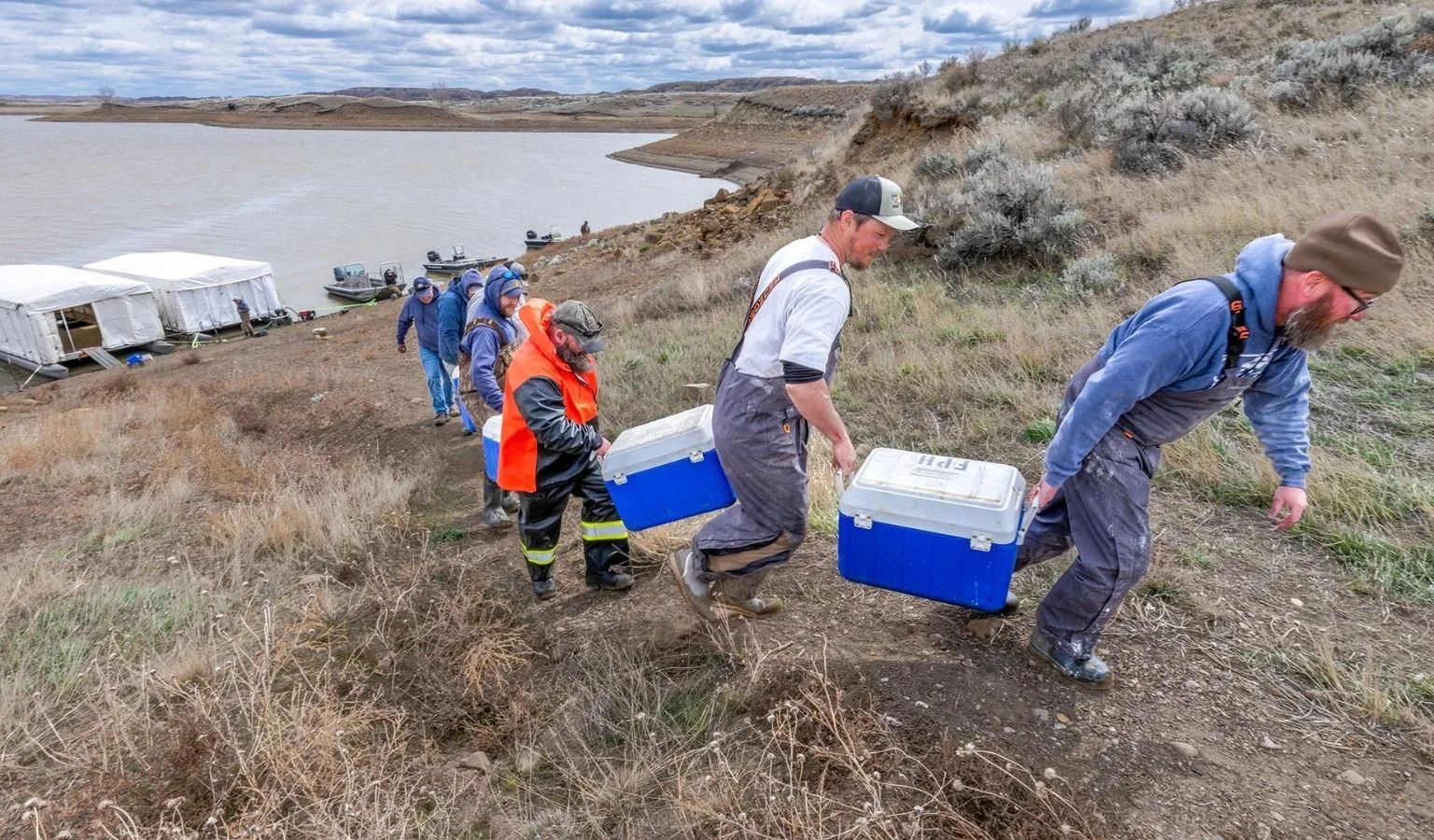
The logistics are as tough as they come. In the teeth of April’s freezing whitecaps, crews net wild walleye and bring them aboard a specialized spawning barge. There, in a display of “assisted reproduction,” workers manually extract millions of eggs. It is a wet, cold, and slippery business that turns the reservoir into a massive, open-air laboratory.
However, the most high-tech piece of equipment on the boat isn’t a computer—it’s a turkey feather. These feathers are used to stir the eggs and milt together, providing a gentle touch that prevents the fragile future fish from clumping or bruising.
As Heath Headley, FWP’s fisheries manager, notes, the fish are often found struggling in water so shallow their fins poke out, trying to spawn in areas that simply won’t work. The human-led operation isn’t just about efficiency; it’s about survival. By gathering 60 million eggs and whisking them away to the safety of a hatchery, the team ensures that when these fish eventually return to the water as fingerlings, they have a fighting chance.
Every walleye caught in Montana likely owes its existence to this frantic, freezing, 25-year-old tradition. It’s a testament to what can happen when humanity meets a bit of clever improvisation—and a very lucky turkey.
Photo by Sean R. Heavey