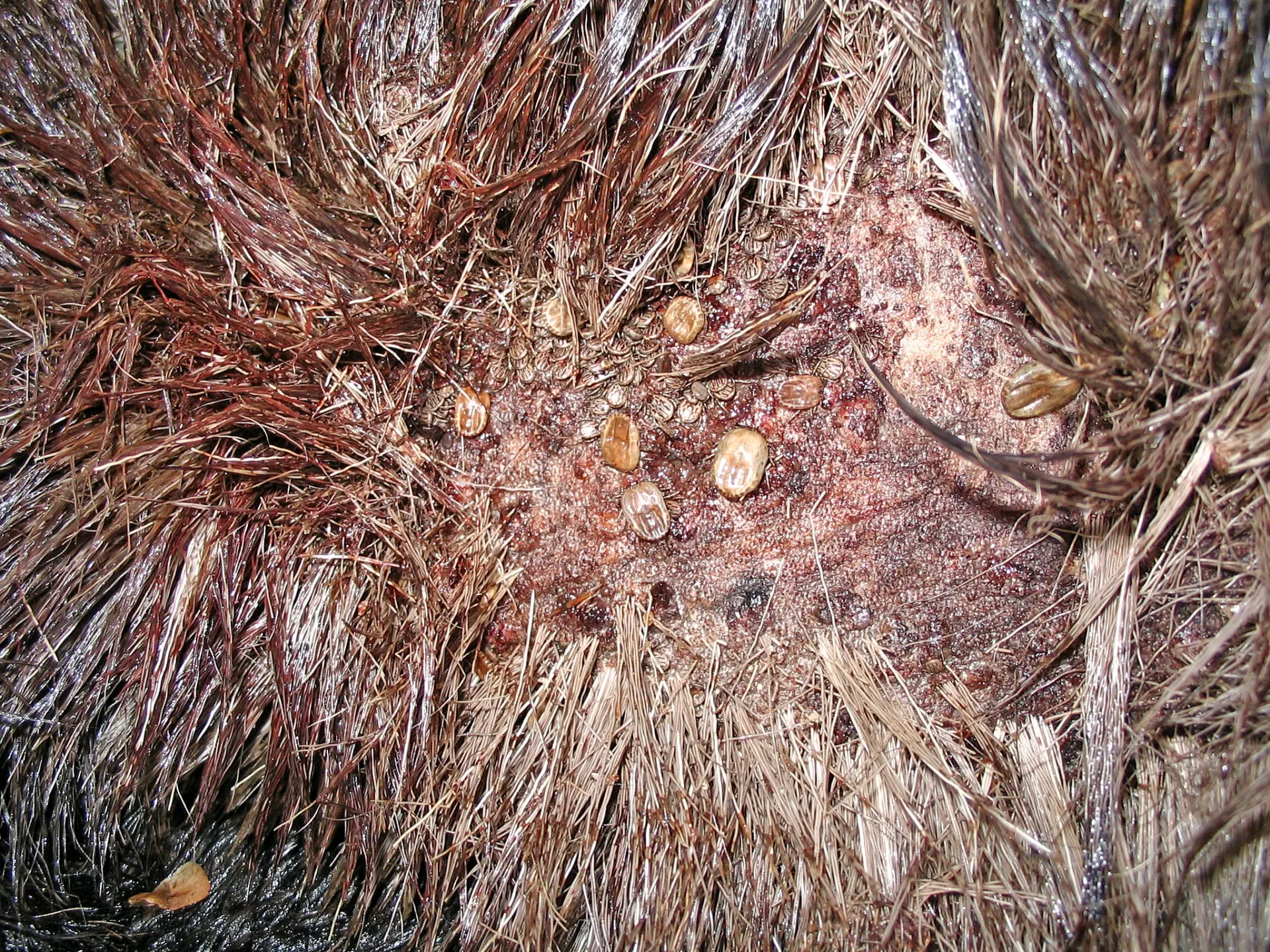
Moose may appear to have a mange-like condition due to hair loss caused by winter ticks
Idaho Fish and Game’s Panhandle Region has recently received several reports of moose that appear to have mange-like conditions or are exhibiting sickly behavior. In most cases, the cause is moose ticks, also known as winter ticks.

Moose typically begin accumulating heavy tick loads in mid-September. The effects of those tick loads often become more noticeable during winter as moose scratch, paw, and rub against objects to relieve irritation. This behavior can cause patches of hair to come off, leaving the animals with bald areas that may make them appear unhealthy.
Seeing moose in this condition is understandably concerning. Although winter ticks are a natural part of the ecosystem, the issue appears to have worsened in recent years, likely due to shorter winters that allow more ticks to survive and reproduce. While many adult moose can tolerate heavy tick loads, calves are more vulnerable and may suffer blood loss, difficulty regulating body temperature and poor overall body condition. Unfortunately, there is nothing Fish and Game can do to control the number of ticks individual moose carry or the abundance of winter ticks in the environment.
If you see or encounter a moose, whether it appears healthy or has hair loss, please remember the following safety tips:
- Never approach or attempt to touch a moose.
- Keep your distance. Moose are unpredictable and may charge if they feel threatened.
- Keep pets on a leash to avoid provoking a defensive reaction.
- Be especially cautious around cows with calves, as they are protective of their young.
- Never feed a moose or any other wild animal. Wildlife that becomes accustomed to human-provided food can pose serious safety risks.
In situations involving human-wildlife interactions, Fish and Game always prioritizes public safety. The Department also prefers to allow wildlife to leave urban areas and return to natural habitats on their own whenever possible.
If public safety is at risk, Fish and Game will intervene, which can include lethally removing the animal posing the threat. In rare circumstances, relocation may be considered if it can be done safely and without increasing risks to the public.
For more information or questions, please contact the Panhandle Regional office at (208) 769-1414.
Follow the Panhandle Region Facebook page for updates and regional news.
Source: Idaho Fish and Game