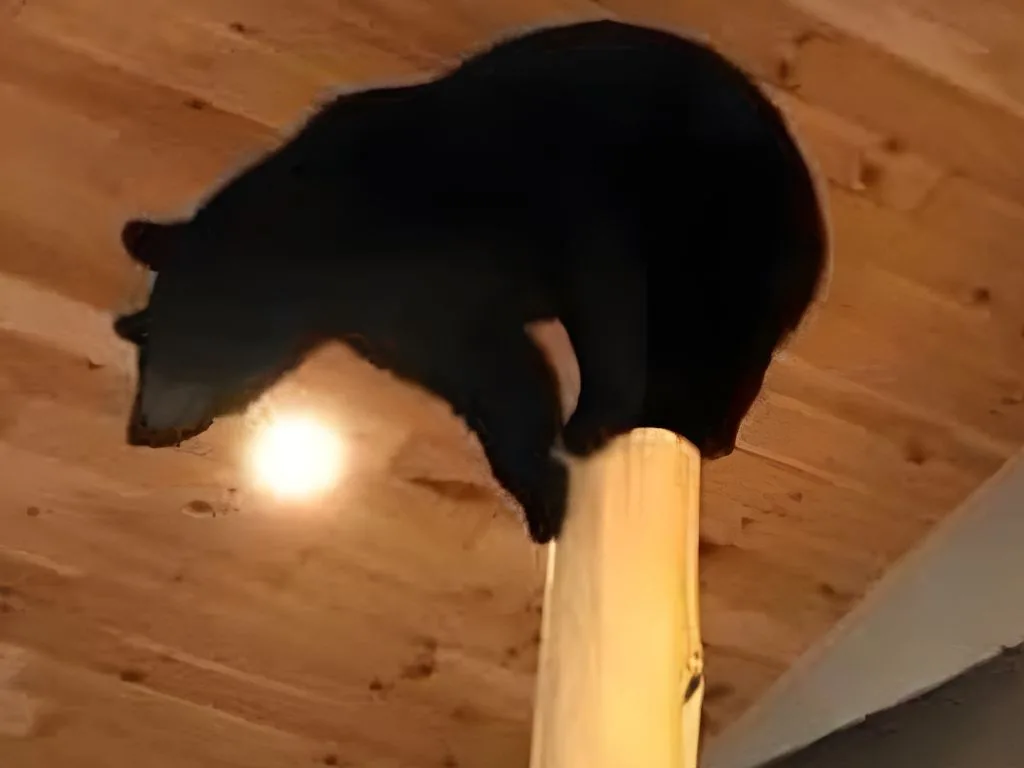
Sometimes you see a mount that makes you stop mid-scroll—and this black bear perched high up on a loft railing, posted by The Hunting News, definitely does that. It is balanced on a post like it just climbed up for a better look, it is lifelike, and impossible to ignore. We’re not sure who mounted this one, but the craftsmanship (and the amazing placement) were too cool not to share. It feels less like décor and more like a moment frozen in time.

Fun fact: taxidermy literally means “skin art,” from the Greek taxis (arrangement) and derma (skin). While ancient Egyptians practiced early forms of preservation through embalming as far back as 2200 BC, modern taxidermy is a completely different animal. Instead of simply preserving remains, today’s taxidermists carefully sculpt anatomically accurate forms—often using foam or custom armatures—before fitting the preserved hide over them to recreate realistic muscle structure and natural posture. The shift toward lifelike displays really took off in Europe during the 18th and 19th centuries and later evolved in the United States with pioneers like Carl Akeley, who developed clay modeling techniques that are still the standard today.
By the late 1800s and early 1900s, taxidermy had transformed from simple hide preservation into a full-blown art form, blending biology, sculpture, and storytelling. Museums, world exhibitions, and eventually American studios elevated the craft into realistic wildlife scenes rather than stiff, expressionless mounts. Whether displayed in a museum, a hunting lodge, or—apparently—high above your staircase, great taxidermy captures motion, anatomy, and personality. And this bear? It absolutely captures attention.
If you want to see more cool taxidermy, be sure to check out Chad Steward’s work from the Big Sky state here.