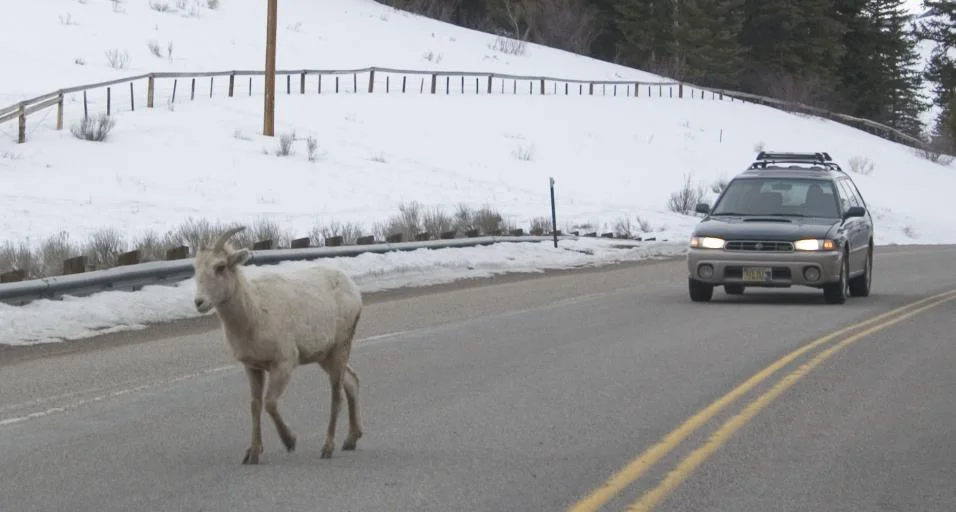
With winter weather in full swing, motorists should be on the lookout for wildlife on roadways. Snow pushes wildlife to congregate into areas of lower elevations, increasing the risk of wildlife-vehicle collisions.
“Animals often use plowed, snow-free roadways to travel as they try to conserve energy during these colder months,” said Martin Hicks, Game and Fish deputy chief of the Wildlife Division. “In some areas, deep snow can cause animals to concentrate their roadway crossings into a small area, increasing the number of animals at risk of being involved in a collision.”
Heavy snow conditions can create barriers for animals who enter a roadway. As snow is plowed from the road surface, it gets wind-rowed along the road edges. Over time, the wind-rows of snow grow in size as the roads are repeatedly plowed. For animals using the road surface as an easy travel lane, or have found their way onto the road surface, these wind-rows can create a barrier preventing a quick escape when a vehicle approaches the animals.
Wildlife-vehicle collisions can occur on all types of roadways, from interstate highways to city streets. Drivers are urged to use caution and stay alert to prevent wildlife-vehicle collisions when traveling Wyoming roads and highways during the winter months. Snow and ice not only make it more difficult for wildlife, but also increase the braking distance for vehicles.
“Reducing vehicle speed, especially around dusk or dawn, in areas frequented by wildlife is one of the most effective ways for motorists to prevent colliding with wildlife,” Hicks said.