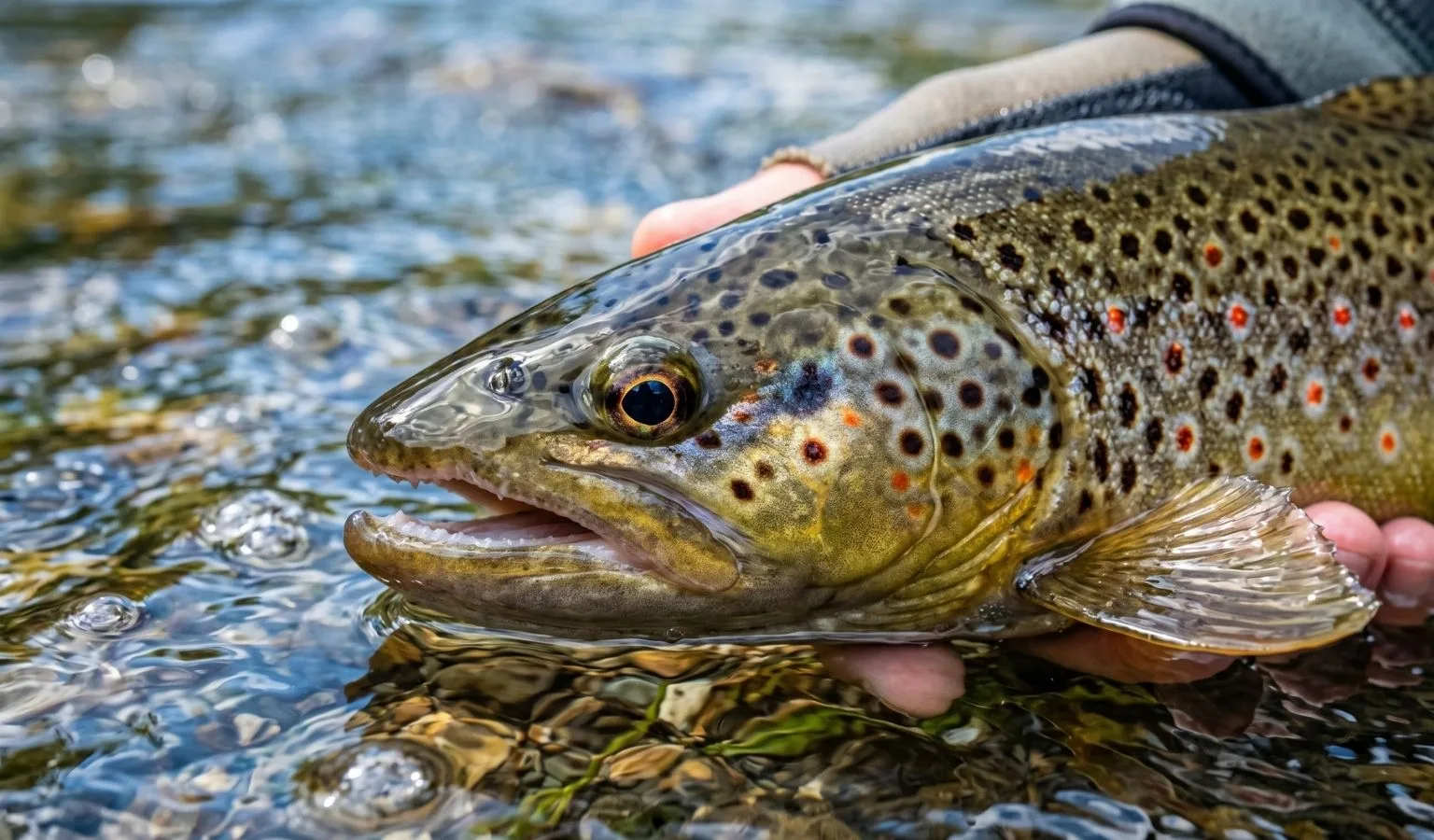
A new article published last week in Fisheries Magazine, the monthly magazine of the American Fisheries Society, studied fish in Mill Creek, near the Creston Fish Hatchery and concluded the following:
“Based on otolith 87Sr/86Sr, we estimated 78% of RBT sampled in Mill Creek originated from Creston National Fish Hatchery, despite no intentional stocking of this species in the Flathead River during the past decade (G. Jordan, USFWS, personal communication). Creston National Fish Hatchery produces approximately 1 million trout annually (750,000 RBT and 250,000 WCT) for release in closed basin lakes in the Flathead basin and water bodies outside of the Flathead basin. Further, there are no other trout hatcheries (public or private) within the Flathead basin that produce RBT. The estimated entry dates for the hatchery RBT into Mill Creek were typically within 0–30 days of our sampling dates, indicating most of these fish either died (Wales 1954; Branigan et al. 2021) or emigrated downstream. However, some of the hatchery-origin RBT had resided in Mill Creek for more than 100 d prior to being sampled, increasing the likelihood they could survive to maturity and potentially hybridize with native WCT populations in the Flathead River system.”
Read the full article here: https://afspubs.onlinelibrary.wiley.com/doi/10.1002/fsh.10985